Showing posts with label maintenance. Show all posts

Tuesday, April 20, 2010

Don Mahaffey's 7 tips for successful gang mowing

Don Mahaffey's 7 tips for successful gang mowing

1. Send out a trim mower to edge out features and fairway perimeters. The gang unit will work a lot faster if he’s not trying to mow a perfect edge and the trim mower will help to keep a “high-end” look.

2. Treat the gang units like every other cutting unit. For some reason people think a gang cutting unit is indestructible or can’t go dull. Big reel, small reel, powered or not, they gotta be sharp and well adjusted. No short cuts here.

3. Don’t irrigate the night before you mow.

4. Get the right unit for the application. You can’t mow fairways with a 5 blade unit. 11-blade units are rare so you’ll probably have to buy the reels and install yourself. But you can get an excellent cut with the right unit.

5. Keep the turf lean and don’t let it get puffy. This goes for all mowing, but especially so for gang units because of their weight. They’ll take big ugly bites out of thatchy turf. If that happens, It’s not the mower, it’s your grass.

6. Alter directions just like you would with any other mowing equipment.

7. Use some of the money you save gang mowing to throw a few more crew parties.

Thursday, April 15, 2010

Here comes the Gang Mower


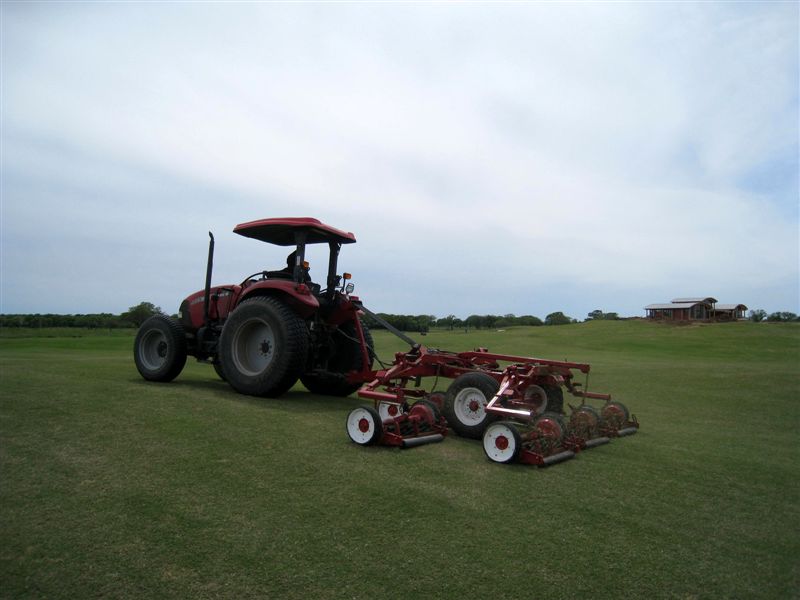
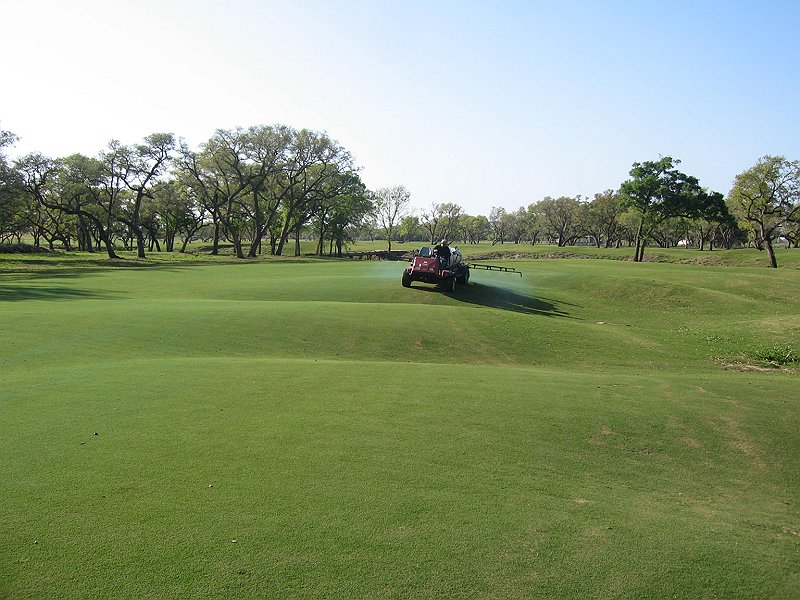
The following is from Don Mahaffey our project and golf course superintendent extraordinaire. Here is his great post from earlier in the year regarding 19 things a golf course can do to lower maintenance costs. The top of his list included something you don't see every day - a Gang Mower - pictured above. He has received several inquiries from around the world once word got out - here Don's take on how it REDUCED THE FAIRWAY MOWING MAN HOURS BY 50%:

When Mike Nuzzo and I started building Wolf Point, we had a few instructions from our client, the owner of the course. Chief among those instructions was he wanted the course outrageously good and he wanted it maintained in a practical manner. Since we were in a very windy area, hard against the South Texas coast, we knew the course needed some width to be playable. The wind blows all the time here. Both Mike and I are huge fans of the Old Course at St. Andrews and we used her as inspiration for a lot of what we did. One of our challenges was to build this big golf course and yet find a way to keep maintenance costs reasonable. One of the ways we decided to do that was design the course so we could cut the fairways with a large pull behind gang mower.

How does mowing equipment like a large gang mower affect design? We made sure any bridges we needed were large enough to handle the tractor and mowing unit. Turned out that with a transport frame a standard 10 ton bridge was fine. Anywhere we had fairway bunkers close together we made sure there was not only room to pull the gang between them, but room enough to alter the path so as not to create permanent tire ruts. This required bunkers being a minimum of 20 feet apart, which was no problem. If we felt they needed to “play” closer together than that we simply shaped the bunkers to gather shots and beefed up the drainage so that they would still be dry if they were gathering water as well as balls. We knew we were going to have dew paths from greens-tees-fairways and we built those paths so the gang unit could mow them as well while traveling from one hole to the next. To create more width we have a number of shared fairways that melded perfectly with the use of a large production mower.


We use a Toro 7-gang (above), wheel driven unit that we found used and refurbished over the winter. We installed 11-blade reels along with going through each unit and adding a new coat of paint. We have the unit set at .500, ½ inch, and we are very pleased with the quality of cut. We took one of our lightweight fairway mowers out of action and converted the cutting units to thatching reels. So now, we have a dedicated fairway verti-cutting machine. We slice the fairways as time allows and right now the plan is too vert-cut every fairway once a month. I believe one of the keys to a high quality of cut with gang units is too keep the grass thinned out. Puffy turf scalps with any mowing equipment but really scalps with a gang unit since there is no front roller. Keep the turf thinned out and not only does it cut better, it plays better as well. We cut our fairways twice a week and apply a growth regulator in conjunction with foliar feed every 21 days.

We maintain Wolf Point’s 80 acres of fwys, 4 acres of greens, and 10 acres of rough, along with other Ranch duties (like bailing hay) with 4 people plus myself. The only way that’s possible is with equipment that can get the job done well and in a practical time frame. Our gang unit helps us do that and I will be surprised if we didn’t see a little more of this approach as golf participation stagnates while maintenance costs continue to increase.

Check back in a few days for Don's tips to a successful gang mowing operation.


Tuesday, December 22, 2009

19 Suggestions for lower golf course maintenance costs in 2010

Don Mahaffey is the superintendent of Wolf Point club and was instrumental to its creation. He has been a leader in practical maintenance since he started over 20 years ago. Although he might say "it's just stupid to do it any other way"
Here are his 19 things you can do to improve profitability without impacting the players enjoyment. (In most cases, not all are good for everyone)

  1. Gang mow, believe it or not you can get decent quality as long as you have a lightweight trim everything out.
  2. Never ever edge a bunker again. Use herbicides like round-up at half strength or contacts and train someone to keep the edges burned back. It actually looks good and is a lot more environmentally friendly then it sounds.
  3. get rid of the walk mowers
  4. Don't over seed
  5. No designer fertility programs
  6. Try and get away from constant foliars and go back to the basics using organic greens fertilizers.
  7. Best growth regulator in the world is less N.
  8. Take out trees that require mowing around, trimming around, or spraying around, and especially if they cause you to spend more time trying to keep turf in the shade.
  9. Be diligent with traffic control
  10. Make your own compost and use in divot mix, sod repairs, dressing thin areas
  11. Stagger work hours so your guys are mowing with fewest players on the course...do what ever you can to get work done with out players interrupting.
  12. Question every expense, stop all cash leaks... don't pay $2,500 for computer irrigation support when you can have a spare computer setting there with software already loaded for 1/5th of that.
  13. Do your own pump station PM
  14. Keep a very tight fuel log...it has a way of disappearing
  15. You can buy parts like bearings and bushings at a bearing shop. Find a small shop that will rebuild your starters.
  16. Be honest in employee evaluation. Employees that can do it all are more valuable then the guy that can only rake bunkers. Pay your good guys more and trim the weak.
  17. Don’t be a warehouse. Don’t buy more than you need of anything. Keeping business afloat right now is all about cash flow, you can’t pay the electric bill with bags of fert, spare reel mowers, or extra irrigation parts. Rarely is there a dire emergency that you can’t go without for a day or two.
  18. Shop for bargains and don’t be afraid to ask for a discount and terms.
  19. Look facility wide at labor waste. Way too many courses have cart attendants or other types of employees who sit around half the time. They can be trained to help maintain clubhouse landscaping and such.
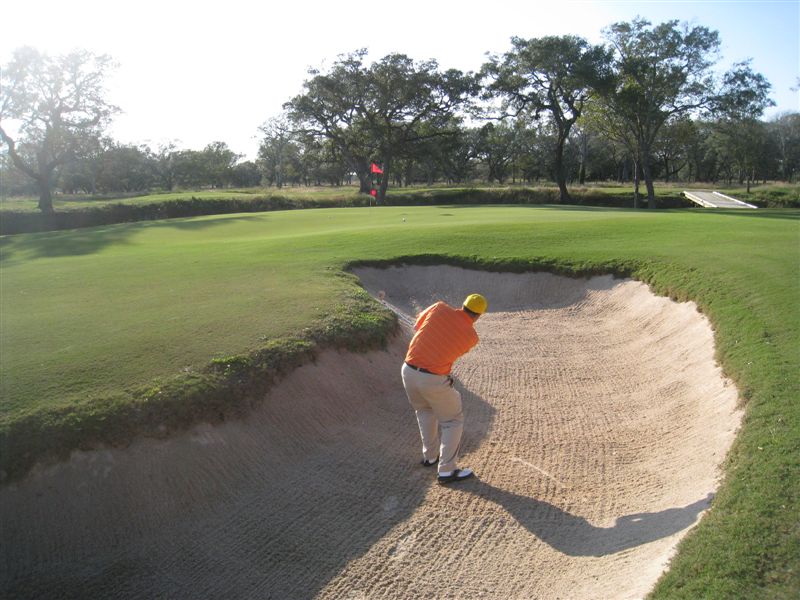
Pictured above is the green side bunker on #16.

Thursday, September 17, 2009

The Texas Trophy


Had a fun three days at the Texas Trophy. The annual golf tournament sponsored by the Lone Star Chapter of the GCSAA.
Memorial Park is a very pleasant place to play.
Jason Harsh is the superintendent that keeps everything in order.
The great flags are provided by Gail's Flags in Fort Worth, TX.
I fared a whole lot better in the Sunday teams and all the great camaraderie.

Thursday, December 25, 2008

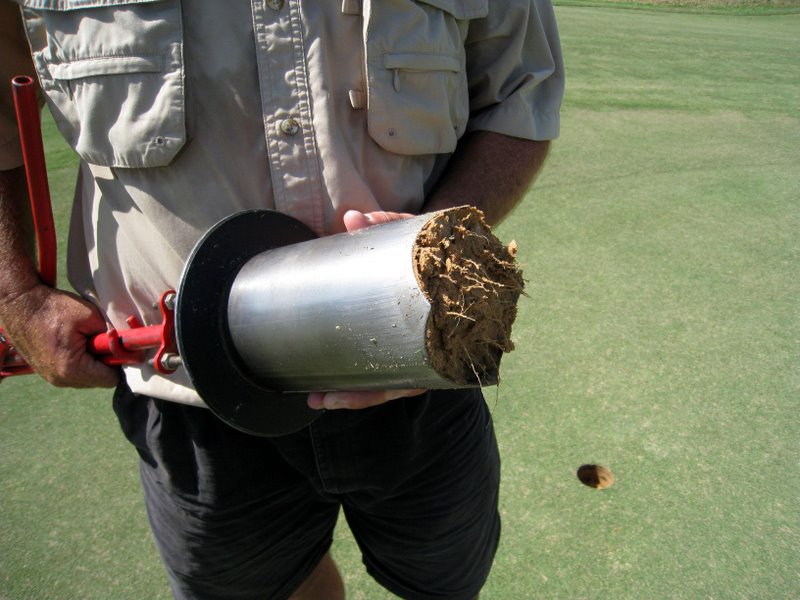
Greens have roots!


Not highly techinical, but one day I asked Don to show me some roots.  This picture was taken in September.  They are long, and the grass is doing great.  Don's practices will ensure that in dry years the grass will be strong and lean - not a whimpy and over watered couch potato that can't handle the heat.

Thursday, November 20, 2008

Maintenance - Then & Now

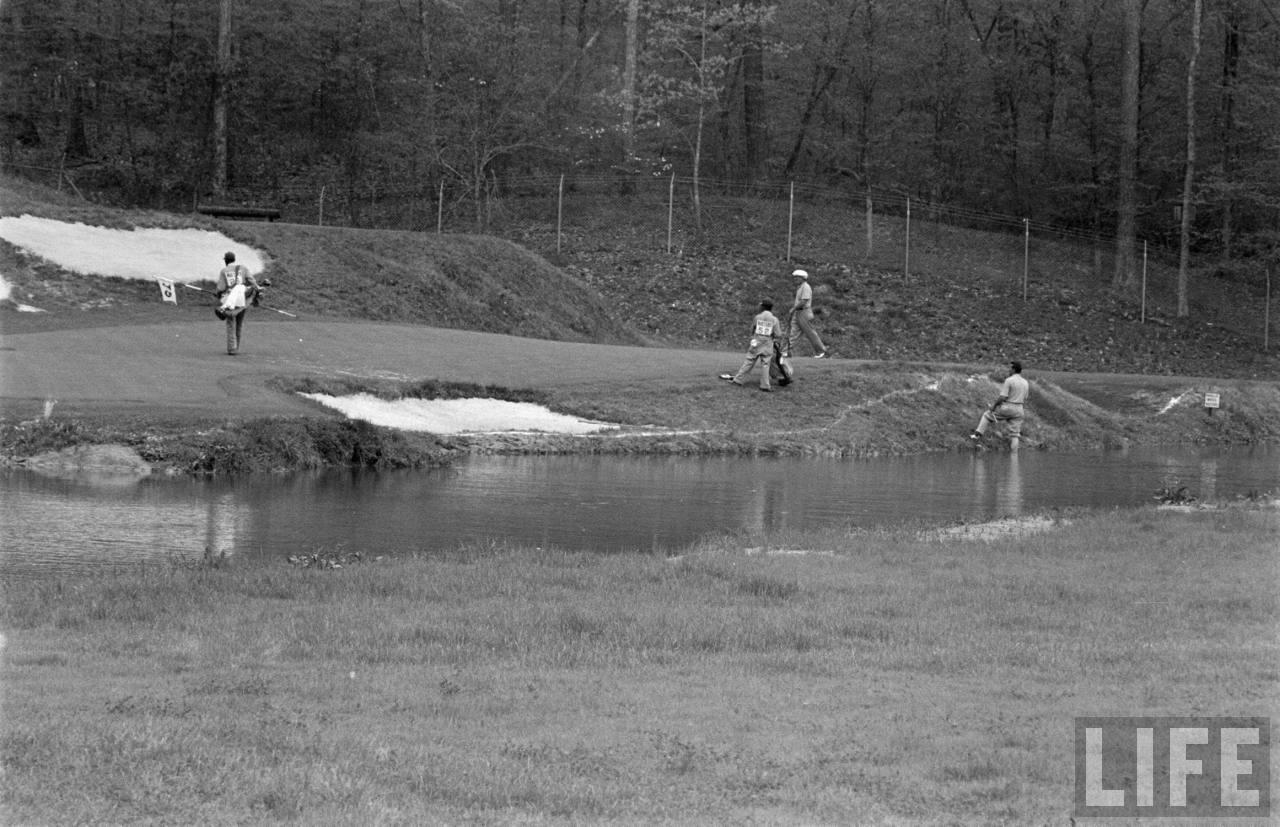
Above is a picture during the 1952 Masters.  It is amazing that conditions good enough for Hogan, Burke, Nelson and Palmer aren't close to the demands of today's average golfer.  Someone complaining about conditions is like a traveler complaining about the high speed internet not working on a plane.  In order for many of today's courses to survive practical maintenance needs to be embraced.


Thursday, September 25, 2008

Course Set Up

"I just set a really great pin on the 15th green" Don said enthusiastically on the phone. "Front left of the green. I also put the 14th tee up a little as it is planing downwind -- give 'em a chance to go for the green in two." Don told me he always enjoyed setting up his courses, but never as much as at Wolf Point. There are so many more variables - the tees can almost be anywhere and the greens are so irregular just a few feet can change the optimum strategy.

Above is the 7th green - with a very front pin.

You can learn a lot about a course if you follow a skilled individual set one up -- better yet -- ask Don.

Sunday, March 30, 2008

15th Green at Sunset

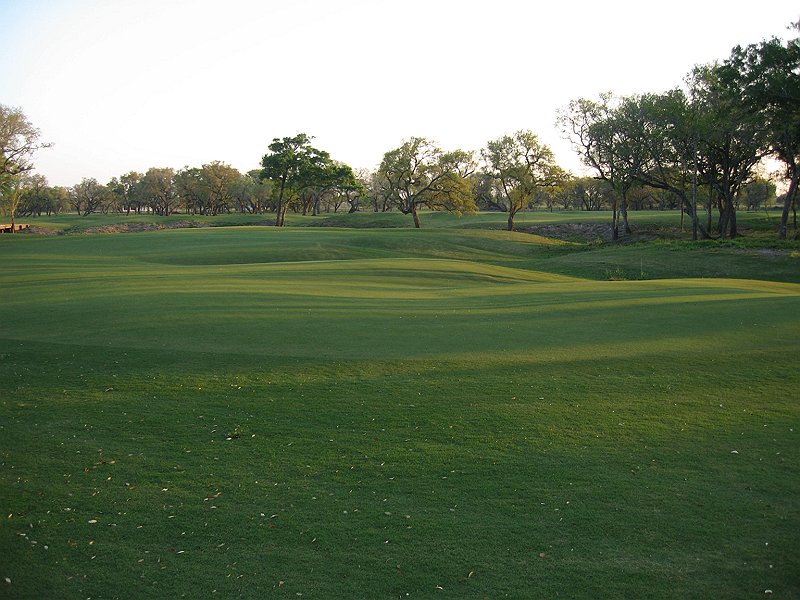
The par three 15th hole has always been one of my favorites - I've never seen a green like it before. It was a natural site protected by a drainage swale that can be seen in the above picture. The following image is to give scale to the contours IN the green. The previous posts on 15 can be found here and here.

Thursday, March 27, 2008

The 7th - An Update

My 2nd favorite picture from earlier this week is above. It is of the 7th green looking back towards the tee. Here were the previous posts on the "once bottle hole" here and here. I've also updated the hole description link to the right, and will be doing so eventually with all the holes.

Why do I love this picture? The green shaping looks very unusual to me. There is a hump in front with a trough through the middle that drains water to the players left - which makes if far more receptive from the far left side of the fairway. It is a shortish par 4 down wind so the long player can challenge the bunker to try and get very close too - but it would be all carry over native grasses.

The grass being as dense as it is looks beautiful too. One can see the walk mower lines. In this image I see a huge milestone to the project and our efforts.

Wednesday, March 26, 2008

Thursday, January 24, 2008

Don Mahaffey -- Part 3 -- Supertendent of the Year Finalist

Don Mahaffey was recently selected as a finalist for Superintendent of the Year for 2007 by Turfnet - formerly Golfweek's Supernews. It is an honor well deserved.
Congratulations Don.

Here is a link to the article.
Here are my three favorite quotes:


"Don is a superintendent who not only is a skilled greenkeeper, but also is a dogged and determined project manager who is not afraid to stand up to architects and construction crews for what he believes is best for the golf course and the checkbook of the man paying the bills."

"His steadfast determination has shaved $2 million-$3 million from the project's original $6.5 million anticipated price tag"

"He has been preaching a practical golf course maintenance program as if he were Jim Arthur," Nuzzo said. "The golf course is already healthy and vibrant and is going to play firm and fast."

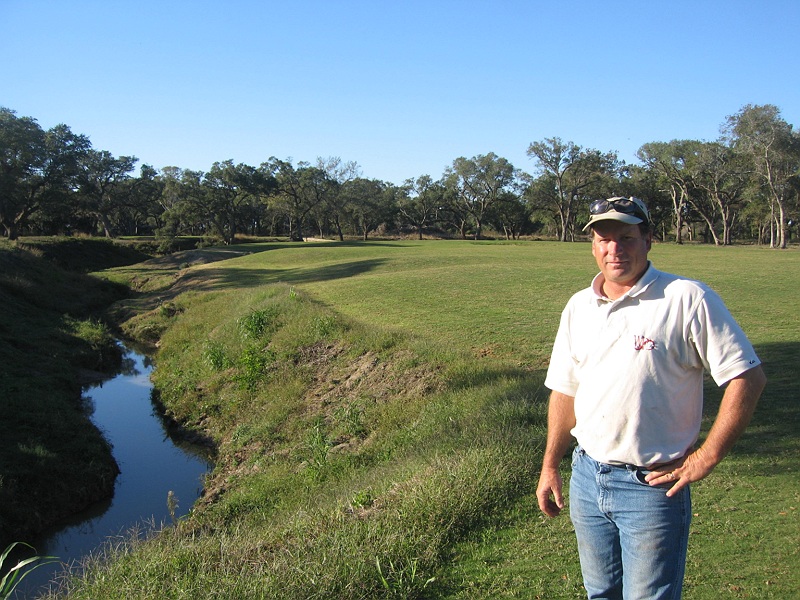
The picture above is from the approach at 16 the creek wraps behind the green too.
Here are the two past blogs about Don:
Part 1
Part 2

Wednesday, November 14, 2007

Virescent Green Grass Growing In

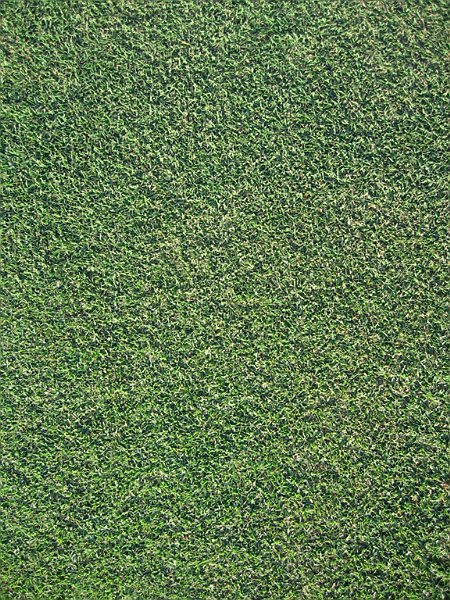
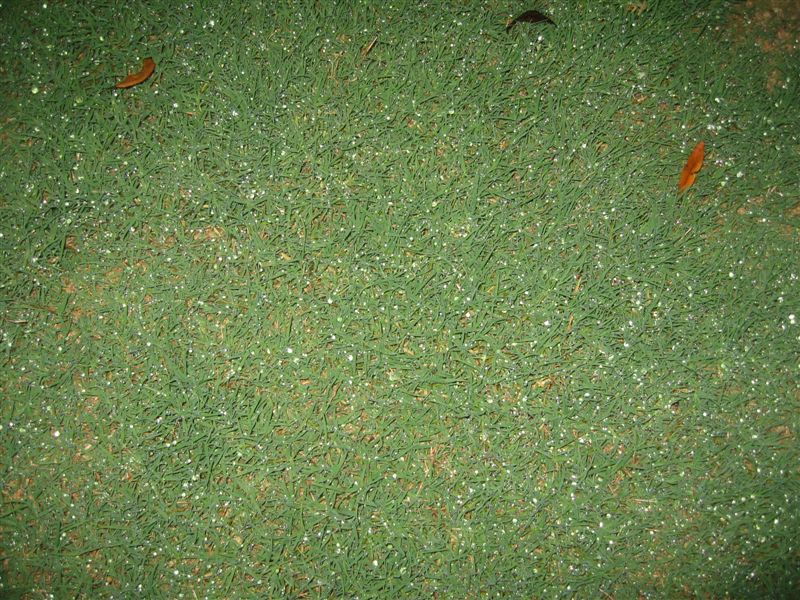
The above picture was taken of the 17th green. It is growing in very well. It is very exciting for me to see the changes in person each visit. We did a number of things quite differently with both the design and construction of the greens. Don mowed one of the greens yesterday - the 2nd. He said it was very large and took him a long time to mow. I'll tell a good story about the 2nd green when I get a picture of it looking good in the early morning light. It is a stunning green.

Can you guess what type of grass this is?

Wednesday, August 29, 2007

The constructed golf maintenance buildings

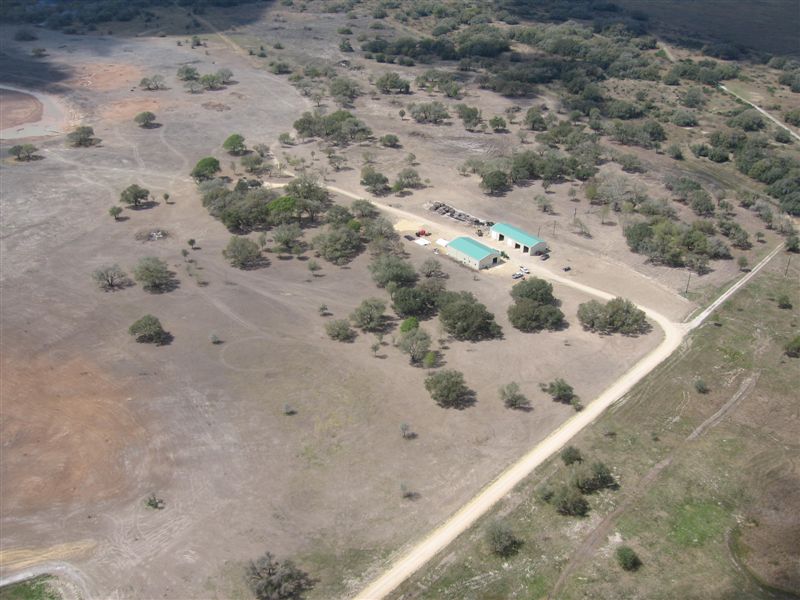
Seen from above you’ll see a good access road for employees and deliveries, access to the course in 2 spots – with maintenance roads traveling along the north of the course. The facility is nicely secluded and sheltered from the course. The pump house is on the way to the course and has irrigation parts stored within to promote an awareness of the station and its operation.

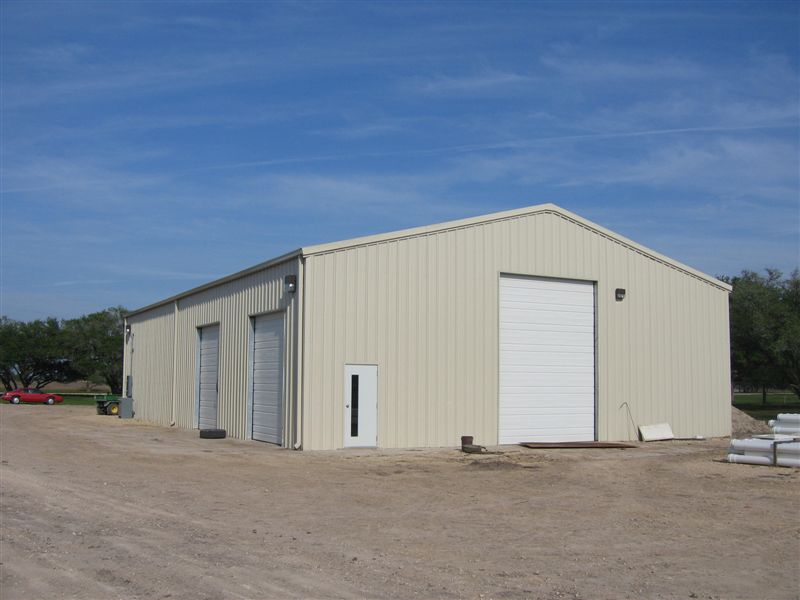
Building 1 above includes the offices and equipment maintenance center.

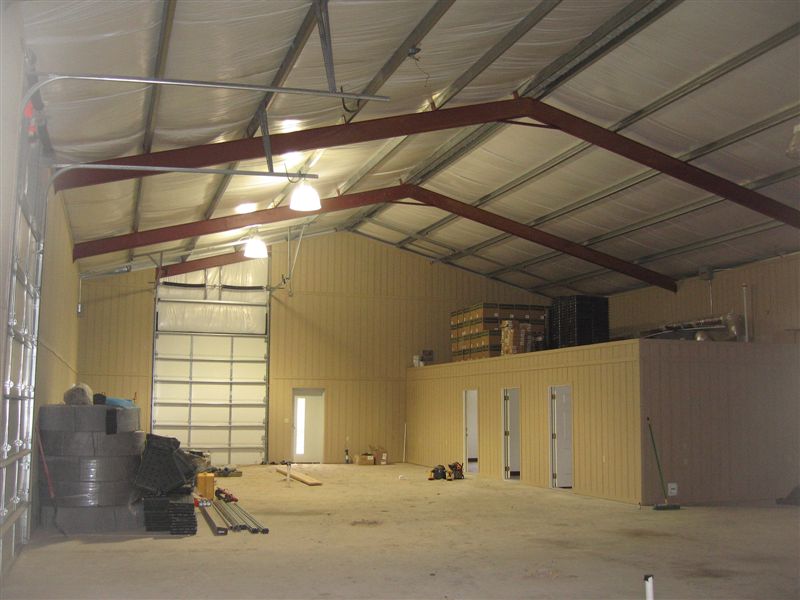
The room on the left is the office for Don and the mechanic, Wayne. The middle door is the shower and lavatories. The last door is the break room – nicely equipped and a cool respit from the hot summer days.

Tuesday, August 28, 2007

Two buildings are better than one

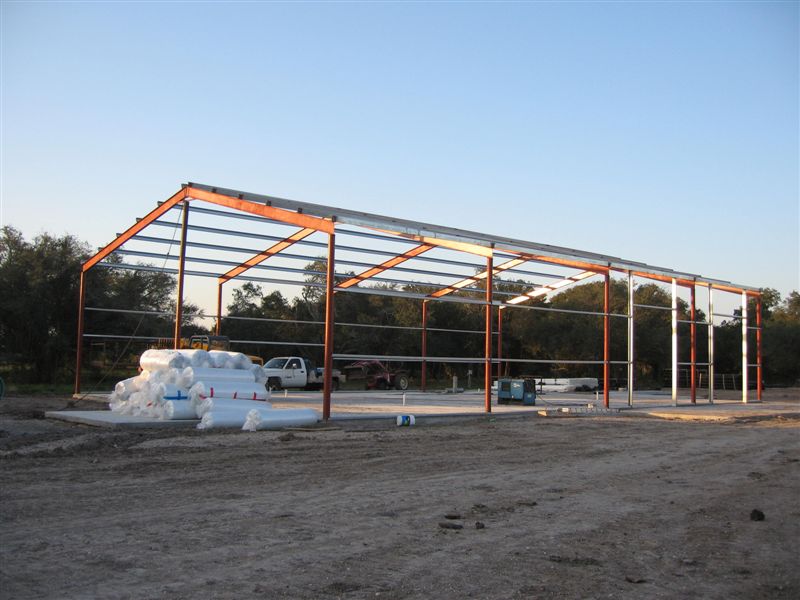
I’ve never seen a maintenance facility that didn’t need more room – and often wind up adding additional buildings over time. Don has said his decisions were all practical – they may be but only if you’ve been an accomplished superintendent for a long time. Don chose to build two buildings – one insulated for the offices and repairs (pictured above) – the other for storage of equipment, the largest piece being the tree spade.

Monday, August 27, 2007

Golf Maintenance Facility Site Location

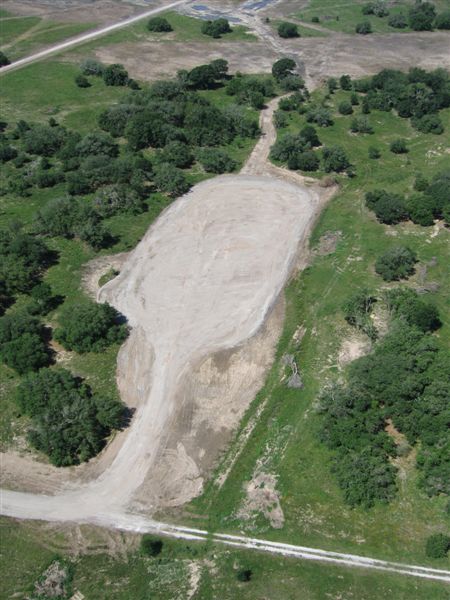
The maintenance facility ideally has multiple easy access points to the course and has a separate entrance able to accept large deliveries. I’ve seen many maintenance old facilities easily visible from the course – and don’t look so pretty.

I wanted to hide ours and keep it close. The course routing is tight – not spread out – which helped the decision to put the facility north of the course. The perfect spot was just outside the course perimeter and didn’t require any clearing –- it was a little wet so required some fill. The above picture was taken 16 months ago -- note the dense tree canopy shielding the facility from the course.

I’ll be showing a progression of the facility -– hopefully Don will share some of the insights and unique aspects particular to the location and the benefits of having the end user be responsible for the layout.